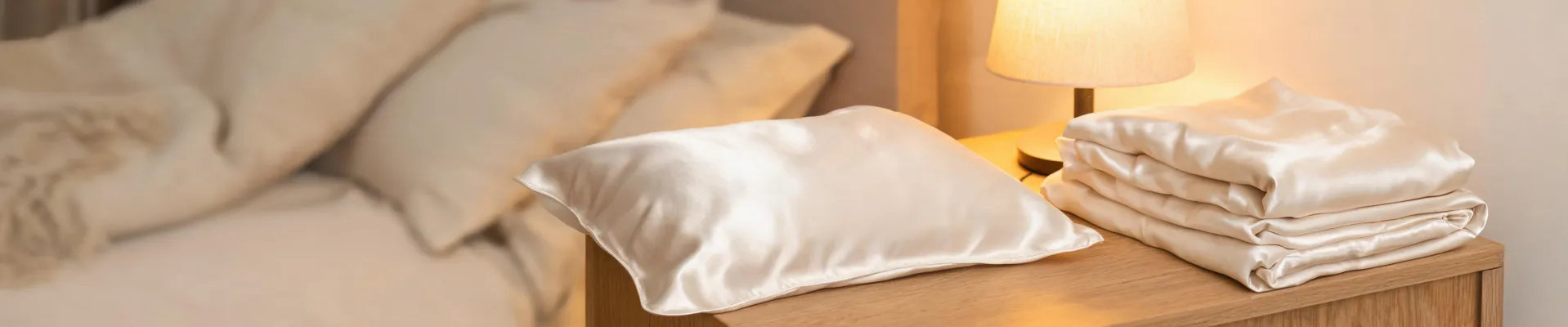
Blissy 22-Momme Mulberry Silk Pillowcase: An Evidence-Based Buyer’s Verdict
2026-09-08 by Ingrid Falk
The Blissy 22-momme mulberry silk pillowcase earns a conditional yes for most first-time silk buyers. The official pages confirm a large, polished brand catalog, but they do not independently verify that every Blissy pillowcase is a 22-momme weave. So the first thing to check is the exact listing title, not the brand name.
The Bottom Line on the 22-Momme Blissy Pillowcase
The Blissy 22-momme mulberry silk pillowcase is a credible option for most first-time silk buyers, provided the words 22-momme mulberry silk appear in the exact listing rather than in a general brand claim. This review is built from Blissy’s official pages, not from independent lab tests, so it can confirm catalog breadth, brand focus, and purchase context, but it cannot certify fabric weight or weave quality. The effective way to read a reviews page, including this one, is as a cue to compare SKU details and buyer protections before checkout. A shopper who checks the product title and spec sheet will find the pillowcase easy to evaluate; a shopper who assumes every Blissy pillowcase is identical may misread the range of colors and licensed collections. The direct answer is yes with a boundary: buy it when the listing confirms the expected 22-momme spec and the return policy is clear.
Blissy’s own homepage positions the company with the tagline “Leading the Silk Revolution” and places Pillowcases at the top of the shopping menu, showing that pillowcases sit at the center of the catalog. The same page reveals the scope of that catalog through licensed collections and color names, and the collections page repeats the same menu. Evidence of this kind proves brand identity and category focus, not uniform product quality. It tells a review reader where the product comes from, but the spec-sheet test must happen on the exact product listing. A careful shopper should treat the homepage as a brand-breadth signal and then verify size, weave, and closure on the item itself.
What Reviewers Focus On: Skin and Hair
When buyers describe a mulberry silk pillowcase in reviews, the positives usually center on sleep comfort rather than lab reports: the fabric feels smooth, hair does not catch, and the surface is soft against skin overnight. In a Blissy review search, that is the practical question a shopper is asking, since the brand sells an entire silk-based sleep story. This review cannot cite independent test data for these outcomes because the available evidence comes from Blissy’s own pages. The useful observation is that the official catalog is structured around those benefit categories, which makes the positive review themes coherent. It also means the buyer should still separate comfort claims from verifiable listing details before choosing a pattern.
The catalog pages support those positive themes by grouping pillowcases with the sleep-and-silk ecosystem around them: the navigation includes Hair Care, Bonnets, Sleep Masks, Loungewear, Pillow Mists, and Dream Sets, and the collection page repeats the same categories. That structure tells a shopper that the brand’s benefit claims are reflected in the way the store is organized. The boundary here is just as important: a navigation menu proves intention and assortment breadth, not thread density or weave count. So while a review focusing on hair and skin is consistent with Blissy’s own positioning, it still needs to be matched to one specific product listing before checkout.
Where the Pillowcase Falls Short
The first shortfall appears in the official catalog itself: instead of describing one uniform pillowcase, Blissy presents a long family of options, from dozens of colorways to licensed prints and even a “Junior” pillowcase size. A shopper who searches for reviews of the 22-momme Blissy may assume the brand guarantees the same fabric everywhere, but the banner pages do not support that assumption. The collections page is a directory of styles rather than a spec sheet, and that distinction is what makes the caveat real: the momme number cannot be assumed to carry over from one listing to the next. Catalog width is therefore the main reason to verify the exact product title before buying, since design variations may each have their own specification.
Beyond catalog breadth sits a verification gap: Blissy’s official pages, including the homepage and collection index, do not provide an independent test report for weave count or fabric weight. A shopper will see the brand language about silk and a “22-momme” label on particular listings, but that is a claim, not a measured certification. Star ratings rarely close that gap because they usually reflect color, packaging, or delivery rather than laboratory analysis. So the known issue is not necessarily product quality; it is the absence of material-grade proof within the official evidence. The sensible reaction is a pre-purchase check on the exact item title, stated momme number, dimensions, and the return policy that protects the first wash.
A Quick Fit Check: Who Should Buy It
A quick fit check comes down to how much proof a buyer wants. The buyer who already plans to compare pillowcases at SKU level and likes a broad color choice can reasonably choose the Blissy 22-momme, because the official range supplies plenty of style options and the brand’s sleep ecosystem aligns with the effect the shopper expects. The buyer who wants independent material testing before paying a premium should instead wait, because the evidence examined here covers official pages, not certified results. The buyer who simply needs a silk pillowcase and does not need the collection story should jump to the exact listing title and dimensions, since brand imagery alone is not a specification. In this matrix, the deciding factor is the level of verification demanded, not the size of the catalog menu.
The same lesson appears on the About Us page, where Blissy’s full navigation and licensed prints sit next to the brand story. The page gives context about expansion and imagery, not a technical note about fabric. For a shopper, this is a reminder about proof levels: a brand page cannot substitute for the spec sheet of one pillowcase. The page points back to the individual listing as the real unit of analysis. That recognition is the useful outcome: start the purchase decision at the product page, where the title and exact details are revealed, and where a return policy can be checked before payment.
How to Compare the Pillowcase Before You Buy
To compare the 22-momme pillowcase before paying, a shopper can run a straightforward checklist in prose. Start with the exact listing title and confirm the words “22-momme mulberry silk” appear there, not only in a banner or collection name. Then compare the dimensions and closure style with the pillowcases owned at home, because differences are easy to miss when the same brand offers multiple sizes. Next, confirm the care instructions and the return policy, as the first wash often reveals whether the fabric matches expectations. Finally, separate the print from the material; if the buyer’s main reason is the licensed design, style matters, but if it is the momme label, that label should be verified on the page being ordered.
The official products page demonstrates why SKU-level caution matters. The same collection index lists licensed lines such as Hello Kitty and Harry Potter, category names such as “Junior,” and colorways such as Champagne and Rose Gold, while also linking to bonnets, sleep masks, and loungewear. In a menu that wide, a headline saying “Blissy 22-momme pillowcase” cannot tell the reader which variation was actually reviewed. The product can easily differ in size, closure, or material spec even when parked under the same brand umbrella. Therefore the shopper should match the exact title, exact listing number, and size before moving any item into the cart.
The Final Verdict and a Simple Rule
The final verdict is that the Blissy 22-momme mulberry silk pillowcase deserves a shortlist place for most buyers new to silk, but the shortlist should be named as “verify before purchase,” not “proven by brand.” The official pages confirm a silk-focused identity, a broad catalog, and a sleep-and-silk ecosystem, which is useful context. They do not confirm an independent grade for the specific variant. Based on the available official evidence, the product is a credible-looking candidate whose real performance claim starts at the listing level. That is the only honest score this evidence allows.
The rule to take away is narrow. Order when the exact product page in the cart repeats “22-momme mulberry silk” in the title and when the store’s return or exchange policy covers an opened pillowcase. Skip it when the page only says “mulberry silk” and the purchase relies on certified proof of grade. Inside that boundary, the pillowcase is a reasonable buy; outside it, the shopper may be paying for collection branding rather than for verified silk performance. That boundary, not the brand slogan, is what separates a defensible purchase from a hopeful one.
The rule stands: verify the exact listing and the return window, and the Blissy 22-momme is a sound buy; skip it when the only proof is a brand-wide slogan.

Ingrid Falk
Ingrid Falk is an outdoor living products analyst specializing in fences, pergolas, gazebos, canopies, greenhouses, shade sails, patio sets, outdoor sofas, and weatherproof cushions. She uses ISO 4892-2 and ASTM G154 weathering methods while comparing UV color change, coating adhesion, corrosion resistance, frame load, joint stability, water shedding, and dimensional movement. Her work helps garden retailers, project buyers, and hospitality operators select structures and furniture suited to wind exposure, climate, installation method, maintenance, and expected occupancy.