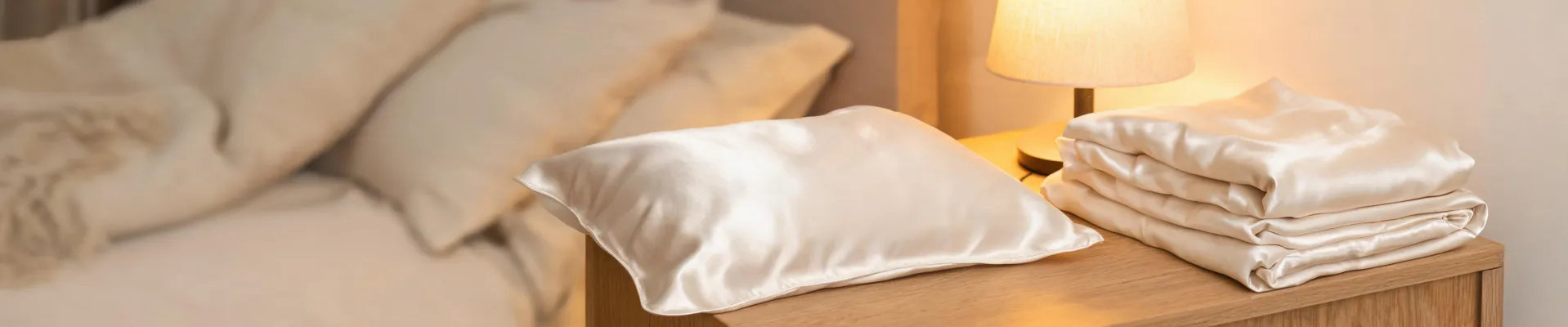
Does a Blissy Silk Pillowcase Actually Cool, Breathe, and Block Allergens?
2026-10-12 by Celeste Romano
Buy a cooling pillowcase, sleep on it two weeks, and you can still wake at 3am with a hot, damp patch under your cheek, flipping the pillow to the cool side and finding it clammy by morning. Spend allergy season on the same case and you may sneeze into a pillow that has been quietly holding dust mites and skin flakes since last spring. That is money gone, the original problem unsolved, and another round of shopping.
So it helps to know where a Blissy silk pillowcase earns its price on the four things this question actually asks about — temperature regulation, breathability, allergen defense, and skin moisture. Blissy's help page ties all four to the silk itself. The airflow and the allergen defense are what you are really paying for. Moisturizing is the thinnest of the four claims, and here is why.
What a Blissy Pillowcase Is Made Of
Strip it back and a Blissy case is a shell of 100% mulberry silk with a hidden zipper, sold in Standard and King. That is it. The spec that separates a real silk case from a satin-look polyester one is momme, the silk-thickness scale; bedding-grade silk runs roughly 19 to 22 momme, and this one sits at the top of that range. A 19-momme case and a 22-momme case look the same on the shelf and feel close in the hand for the first week, but the thinner shell wears through at the zipper seam faster and drapes looser across the pillow. The brand's own wording stays on how the fabric behaves and stops there. Notice what it does not say: it does not say the pillowcase treats eczema, cures acne, or replaces a mattress. Those upgrades would turn a pillowcase into a medical device, and they are not what is written. Whether the four properties matter to you depends on how you sleep, which is the part most buyers skip.
Silk vs Cotton vs Satin Pillowcases
Put a cotton pillowcase next to a silk one and the difference shows up by morning. Cotton terry and jersey absorb sweat and face oils and then dry slowly, so a hot sleeper wakes on a damp pad that stayed damp all night. Satin bedding is usually woven polyester; it feels slick and cold for the first few minutes and then traps heat worse than the cotton it replaced, because polyester does not move moisture at all. What silk does instead is let air pass through the weave and pull moisture off your skin. A skeptic would say satin looks identical and costs a third of the price. Fair, until you look at what satin is. Satin names a weave, not a fiber. A polyester satin case inherits the shine and none of the airflow, so the comparison falls apart the moment you ask what the fabric is made of. A silk satin case can be good; the word on the label that matters is silk, not satin.
Why Your Pillow Gets Hot at Night
Here is the 3am test. You wake hot, flip to the cool side, and by 5am both sides are warm and slightly damp and you are awake for good. Breathable silk lets air circulate and moisture wick away from your skin, which is the mechanism that prevents overheating and discomfort long enough to sleep through. The obvious objection is that no pillowcase cools you when the room is 80 degrees Fahrenheit. That is true, and it is the wrong frame. A pillowcase is not air conditioning; it cannot lower your body temperature. What it can do is stop trapping your own heat and sweat against your face for eight hours, which is exactly what a cotton or polyester case does. If your bedroom runs hot, fix the room. The case decides whether the air that is already there can move. I have run a silk case and a cotton case side by side in the same warm bedroom, and the silk one stays dry to the touch while the cotton one goes flat and clammy. Same room, same sleeper, different fabric.
What Hypoallergenic Really Means Here
Hypoallergenic is one of those words that sounds bigger than it is. Blissy describes the material as hypoallergenic, keeping allergens away and making the case a good fit for allergy sufferers. Read that as a fabric property, not a filter. Cotton holds onto skin flakes and moisture, and those two things are what dust mites feed on; a smooth silk weave gives them far less to grab, and a case you can wash often and air-dry quickly keeps resetting the reservoir instead of building one up over a winter. A skeptic would say a pillowcase cannot stop airborne pollen. Agreed. It does not filter your room and it will not help with the pollen you breathe in from an open window. What it removes is the fabric reservoir your face presses into for eight hours, and that is the exposure you actually control. If your morning sneezing tracks with freshly washed bedding versus week-old bedding, this is the lever that moves.
Does Silk Actually Keep Skin Moisture In?
This is the claim to be careful with. Blissy describes luxurious comfort for deeper, more restful sleep, and states that moisture wicks away from your skin rather than soaking in. Wick away, note, not lock in. The real effect people notice is subtraction, not addition. Cotton pulls your night cream and your own facial oils off your skin and into the fabric, so a heavy cream that seems to disappear overnight often went into the pillow rather than your face. Silk gives more of it back instead of drinking it. For someone with dry skin or morning sleep creases, the win is not adding moisture; it is not stripping what is already there. Why the other three claims matter to this one: if you buy a silk case only for skin benefits, sleep in a cold room, and have no allergies, you may not feel much of anything. Buy it because you run hot, or because you sneeze at night, and the moisture part is a side effect you get for free.
The One Check Before You Order
Before you order anything, measure your own pillow, length and depth, and match it to the right Blissy size, Standard or King. The brand sells both, and the wrong one undoes everything above. A case that is too small bunches at the corners, slides off during the night, and traps the very air the whole product is sold on; a case that is too loose slides around under your face and pulls at the zipper. Silk does not stretch back the way cotton does, so the measurement is not a suggestion. Do that one thing, and the airflow, the temperature regulation, and the allergen defense all get a chance to show up. Skip it, and you will be judging a silk pillowcase on a fit problem you created.

Celeste Romano
Celeste Romano is a bedding and silk-textile analyst covering sheet sets, duvet covers, comforters, quilts, blankets, mattress protectors, silk pillowcases, silk sheets, scarves, and sleep masks. She applies ISO 12947 and ISO 105-C06 methods while evaluating abrasion resistance, wash colorfastness, shrinkage, seam strength, fabric mass, thread density, moisture handling, and silk momme weight. She helps hospitality buyers, bedding retailers, and sourcing teams compare material claims, care requirements, durability, comfort, and finish for repeated use.