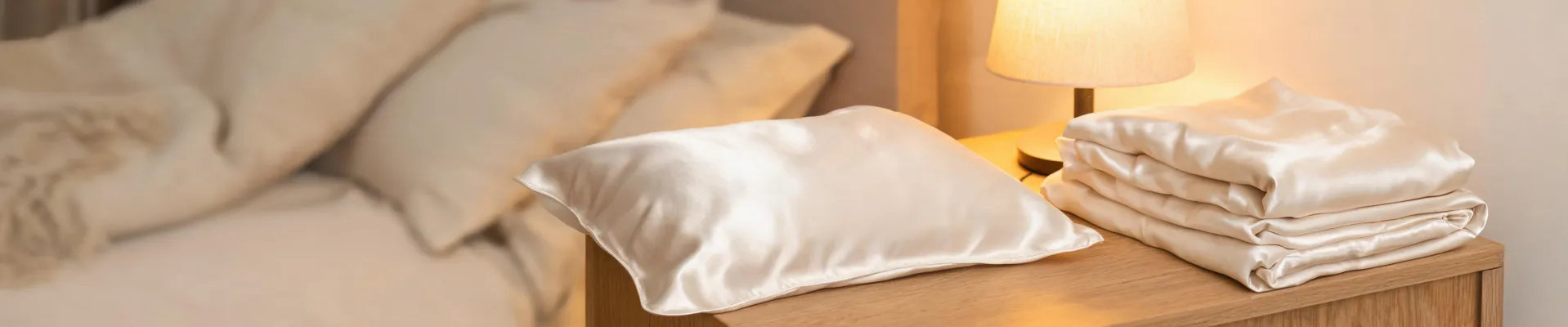
Can You Machine Wash a Blissy Pillowcase? The Complete Care Guide
2026-09-07 by Ingrid Falk
-
Machine Wash vs. Hand Wash: The Ownership Dilemma
-
What Blissy's Silk Really Needs (and What the Website Won't Tell You)
-
Cold Gentle Cycle vs. Warm Regular: A Setting-by-Setting Comparison
-
Regular Detergent vs. Silk-Safe Wash: Protecting Fibers Where It Counts
-
Air Dry Flat vs. Low-Tumble Dry: Finishing the Job Without Damage
-
The Final Machine-Wash Rule You Can Reuse for Every Blissy Case
You have two ways to handle a Blissy pillowcase that has picked up facial oil and makeup smudges: scrub it by hand in the sink or drop it into the washing machine and hope for the best. The first route eats your evening; the second can turn a smooth silk surface into a matted, twisted mess if you choose the wrong cycle. The truth sits between the extremes: machine washing is not forbidden for mulberry silk, but you must control temperature, agitation, spin speed, and detergent.
Machine Wash vs. Hand Wash: The Ownership Dilemma
Deciding whether to hand wash or machine wash is really a question of what you are willing to trade. Hand washing treats each inch of the pillowcase gently: you control the water, target the oily sections around the neckline, and never let a machine wring the fabric. But it is slow, demands a clean sink and repeated rinses, and leaves you squeezing a saturated, slippery sheet to remove excess water, exactly the motion that can distort silk when done impatiently. Machine washing trades that labor for mechanical risk. Tumbling, agitation, and high-speed spinning all stress a protein fiber that lacks the elasticity of cotton or polyester, so any mistake is multiplied across a whole wash basket. Neither option is correct by default. The suitable route depends on the cycle your appliance provides, whether the case is already weakened, and the minutes you have tonight rather than on a permanent rule.
The brand itself nudges you toward a careful read. Blissy's official page opens with the tagline 'Leading The Silk Revolution' and fills its navigation with pillowcases, hair accessories, bonnets, sleep masks, loungewear, and candles. That marketing weight tells you the company wants to sell an entire premium sleep ritual, not a maintenance manual. A homepage that pushes 'Experience Pure Bliss' instead of publishing one universal washing instruction is its own message: luxury textiles carry individual labels, and online copy is designed to build desire rather than replace the care tag sewn into your seam. When the official catalog emphasizes the breadth of its silk lifestyle without adding a single care code, the absence is a deliberate signal that the fabric should not be treated as a one-size-fits-all product. Before you trust a blog or forum answer over the brand's silence, consider what that silence means: status materials demand the same deliberation you are giving this decision now.
What Blissy's Silk Really Needs (and What the Website Won't Tell You)
At the fiber level, a Blissy pillowcase is not the same task as a cotton T-shirt. Silk is a protein filament, and its exposed surface reacts poorly to heat, alkaline cleaning chemistry, and aggressive friction. Warm or hot water can set body oils deeper into the weave, make the fibers stiffen, and dull the natural sheen that buyers pay for. Detergent with enzymes or brighteners can strip protective layers from the yarn surface, while fast mechanical churning can abrade individual filaments until they start to split into microscopic fuzz, the tired, worn edge you see on old silk collars and hems. Most owners focus on temperature first, but the mechanical stress is the larger hazard. A cold setting on a normal cycle still rubs fabric against fabric at high speed, and local friction from that contact does more damage than lukewarm water. Cold water protects the chemical bonds, but it cannot protect fibers that are being bent, pounded, and twirled for forty minutes. You need to control the cycle, not just the thermometer.
Even the brand's own lineup makes the point. Open the current Blissy product pages and you find a long tail of collections: Hello Kitty and Jurassic Park collaborations, Minions and Wicked prints, Nicole Miller and The White Lotus designs, plus solids, tie-dye, leopard, ombré, rainbow, and a full junior range with its own sizing. The color list alone is massive, Aqua, Emerald, Champagne Ombre, Pearl, Rose Gold, Royal Purple, Shark, Sunshine, Tiger, Unicorn, and Zebra, and each is offered in multiple pillowcase formats. Those references are not arbitrary decoration; they enforce a practical conclusion. A character print may use a different ink layer than a plain champagne solid, an ombré dye run may need cold-only handling to keep its color from migrating, and a junior case may be sewn with different trimming. With a catalog this wide, no official page can responsibly advertise one universal machine code. The label sewn into your specific case, not the website menu, not a forum thread, and not a generic silk blog, is the only authority for what your pillowcase can tolerate.
Cold Gentle Cycle vs. Warm Regular: A Setting-by-Setting Comparison
Once the care label gives you the go-ahead, two machine routes deserve head-to-head comparison: a cold gentle cycle and a regular cycle run on warm. A warm regular cycle feels like a deeper clean because warmer water lifts oils faster and high agitation removes more soil in one pass, but it is also the quickest way to damage silk. Heat accelerates protein stiffening, while vigorous tumbling abrades individual filaments enough to turn a glossy finish matte after repeated washes. A cold gentle cycle relies on detergent rather than heat to lift the soil, and its slow drum motion lets the threads stay relaxed for the entire wash. For a pillowcase that has only absorbed facial sebum, a trace of moisturizer, or a little makeup over a few nights, the soil load is light. Light soil does not require heat; it requires time, cool water, and mild chemistry. For routine maintenance, the cold gentle cycle wins because it cleans adequately while preserving hand feel. A warm regular cycle is an occasional high-risk route that should never run without a prior check of the care label.
The real difference between these two cycles is not only temperature: it is what happens during the spin that follows. Saturated silk is heavier than dry silk, and if the drum accelerates to a normal high spin, centrifugal force knocks the fabric against the drum wall, creates creases, and distorts the weave. Even on a cold-water wash, a regular spin speed can compress and fatigue the protein fibers. That is why choosing cold without lowering the spin is only half the solution. The protective combination is cold water plus a delicate or hand-wash program, which cuts both agitation and final spin. Where your machine allows it, lower the spin to the slowest option, often below 600 rpm, and add the extra cushioning of a mesh laundry bag. A bagged pillowcase tumbles less violently, is less likely to knot, and spins with less force against the surface. Treat the spin dial as the more dangerous setting; it is usually the one that ruins silk while everyone is watching the temperature.
Before you lock in that setting, check the sewn-in tag on your specific Blissy case, because the brand's product variety makes every generic recipe conditional. The official catalog lists dozens of distinct releases, including Harry Potter, Trolls, Minions, Animal Print, Sherbet Striped, Emerald Jungle, and many more, and that breadth is a reminder that not every pillowcase shares an identical finish. A licensed print can use a different dye or a sealing coat; a striped design can behave differently in tumbling; a junior-size case may have different elasticity at the opening. The website's huge collection does not come with a universal care code, so the label wins. Look for the fiber content, the maximum washing temperature, any do-not-bleach or do-not-twist marks, and the drying symbol. If the illustration or garment finish is unusual, run the first wash on the most conservative setting rather than assuming standard silk rules apply.
Regular Detergent vs. Silk-Safe Wash: Protecting Fibers Where It Counts
Detergent is where many careful plans fall apart. Keep regular powder detergents, formulas with optical brighteners, enzyme boosters, or bleach alternatives far from a Blissy case; those are built for cotton and synthetics and can strip silk's surface coating and make the weave harsh. Fabric softener is worse: it deposits a waxy layer that builds up over time and flattens the fabric's drape. Compare two practical classes: a mild neutral liquid labeled for delicates and a dedicated silk wash. The mild liquid is the default because it lifts oil without attacking the protein fiber. The dedicated silk wash adds pH buffering for extra safety. For the light soil on a face pillowcase, you do not need a high-foaming formula; a small amount of gentle liquid or baby shampoo dissolved in cold water is enough. If your case is heavily stained, pretreat the spot with a drop of the same mild liquid and cold water rather than a chemical remover. Always add the detergent to the water before the case, so no concentrated liquid lands directly on silk.
You may notice that Blissy's official storefront sells Pillow Mists, Care Dream Sets, candles, loungewear, and sleep accessories right next to the pillowcase categories. That arrangement is seductive: it creates the impression that all these lifestyle products belong in the same cleaning routine. The evidence here is about scale and merchandising, not chemistry. The storefront shows that Blissy treats its customers as people who buy an entire sleep experience, but it does not claim that a mist or candle reduces the need for proper laundering. A pillow mist is fragrance, not detergent; a sleep mask does not wash your pillowcase. The correct inference is the opposite: if care were as simple as using one branded helper, the brand would say so. Instead, the enormous accessory ecosystem is a reminder that the product pages are marketing. Choose your wash product by its formulation for silk, not because it shares a store tab with a candle, and always defer to the sewn-in label.
Air Dry Flat vs. Low-Tumble Dry: Finishing the Job Without Damage
Drying finishes the job, and two paths face you: laying the case flat in open air or tumbling it in a dryer set to low heat. Tumble drying, even on low, repeatedly flexes wet silk while the fibers are at their most vulnerable. Low heat may dry the case in twenty minutes and smooth most wrinkles, but each run abrades the surface slightly against the drum and other items. Air drying flat is slower, often requiring several hours, but it puts zero mechanical strain on the weave and lets the case keep its shape. The downside is cosmetic: the fabric may hold creases from the way you laid it. Creases are easier to manage than broken fibers or a dulled sheen, which are the usual results of repeated tumbling. For weekly maintenance, flat air drying is the recommended default. Keep low-tumble dry for an occasional time crunch, and when you do use it, keep the mesh bag closed, use the lowest heat, and remove the case while it is still slightly damp.
If flat drying leaves wrinkles, steam is the gentler tool. Use a handheld steamer or the steam setting on an iron while holding the nozzle a few centimeters away from the silk; the moisture relaxes the fibers without direct pressure. If you must use an iron, set it to the low silk temperature, slip a thin cotton press cloth over the case, and glide quickly without stopping on any one spot. Treat printed panels with caution: heat can bond decorative ink to the soleplate and ruin the artwork, so steam around those areas and do not let the metal touch them. Also avoid pulling on the fabric while it is wet, since a stretched seam will not recover. A mildly creased pillowcase will drop most of its lines during a few hours on your bed; fiber damage will never repair itself. Whenever you can avoid heat and mechanical force, choose air drying and a quick steam.
The Final Machine-Wash Rule You Can Reuse for Every Blissy Case
Now turn the comparison into a reusable routine. Start at the label: confirm the fabric is mulberry silk and look for any decoration that changes the care class. When you wash, turn the case inside out, seal any button or zipper, and drop it into a zip-top mesh laundry bag to buffer the fabric. Run the coldest water available, choose the gentle or delicate program, and if the machine lets you, reduce the final spin to its slowest speed, commonly below 600 rpm. Add a small amount of a mild liquid detergent or a silk wash to the detergent drawer, never pour it over the pillowcase, and keep bleach, fabric softener, and stain-remover pens out of the load. When the cycle ends, unload immediately, gently reshape the case, and lay it flat on a dry towel out of direct sunlight. For an occasional time crunch, use the dryer on no heat or the lowest tumble for only a few minutes and take the case out damp; let it finish drying in the air.
You started with a genuine dilemma: hand wash is laborious, machine wash feels reckless. The resolution honors the luxury identity that Blissy claims with its 'Leading The Silk Revolution' tagline, not because taglines contain care instructions, but because they remind you why you chose silk in the first place. You bought the premium hand-feel and the sheen, so the machine must work around the fabric, not the other way around. When time and energy are plentiful, hand washing in cool water is still the least risky route. When you use the machine, the only sequence that earns its place is cold, gentle, low-spin, mesh bag, mild liquid detergent, and flat air dry. Warm regular cycles, enzyme detergents, and high-speed spins all invert that priority and sacrifice the fabric to convenience. This is not a permission slip to break the rules, nor a ban on washers. It is a conditional rule that keeps your Blissy pillowcase intact whenever you decide to run it.
So let the decision rule be short enough to remember at the lid of your washing machine: check the label, bag it, choose cold and the softest cycle, cap the spin, and dry flat. If your sewn-in care tag disagrees with any step here, the tag wins. If your pillowcase carries a print or an unusual finish, treat it as the more precious variant of itself. Every Blissy model can go in a washer, but only a carefully controlled one.

Ingrid Falk
Ingrid Falk is an outdoor living products analyst specializing in fences, pergolas, gazebos, canopies, greenhouses, shade sails, patio sets, outdoor sofas, and weatherproof cushions. She uses ISO 4892-2 and ASTM G154 weathering methods while comparing UV color change, coating adhesion, corrosion resistance, frame load, joint stability, water shedding, and dimensional movement. Her work helps garden retailers, project buyers, and hospitality operators select structures and furniture suited to wind exposure, climate, installation method, maintenance, and expected occupancy.